
I could sense something was wrong the moment Lourdes spoke into her phone. We’d met through our shared affinity for community empowerment and local advocacy; the urgency in her voice signaled a deep crisis. I listened as my neighbor from Playa de Ponce detailed her frightening situation: defending herself against a collection letter from the CRIM: the agency was demanding property taxes on a home in which she has lived for decades, a defense fatally complicated by unresolved title issues and an outdated land survey.
Lourdes’s situation is just one example of how property taxes are creating new community injustices in Puerto Rico. Under orders to increase municipal tax revenues, the Puerto Rico municipal property tax authority (CRIM, or Centro de Recaudación de Ingresos Municipales), began implementing virtual property tax appraisals in 2025. This new method relies on digital cartography and aerial photography to identify unreported land improvements dating back to 1998, such as building modifications, pools, and commercial land uses. The new property tax initiative is projected to target approximately 240,000 properties (Minelli Pérez, 2025).
This aggressive initiative effectively demands compliance and back taxes on unregistered construction, while seeking to catch instances of illegal tax exemptions or undeclared commercial uses. Any unformalized construction, such as in the island’s 742 slum communities which account for an estimated 164,364 homes (Rivera-Grajales, 2014), is exposed to immediate government scrutiny and taxation. This leads to retroactively adjusted tax bills, back taxes, and the threat of tax foreclosure.
The initiative was supposed to be a precise tool to curb tax evasion and increase municipal coffers. Instead, it created a scandal. It failed to distinguish permanent structures from non-permanent ones, leading to tax assessments based on sheds, tarps, electrical transformers, and even doghouses. This catastrophic failure in public administration generated highly inaccurate and fluctuating tax bills, causing immense anxiety for citizens, particularly the elderly, which prompted legislators to call for an investigation (El Nuevo Día, 2025).
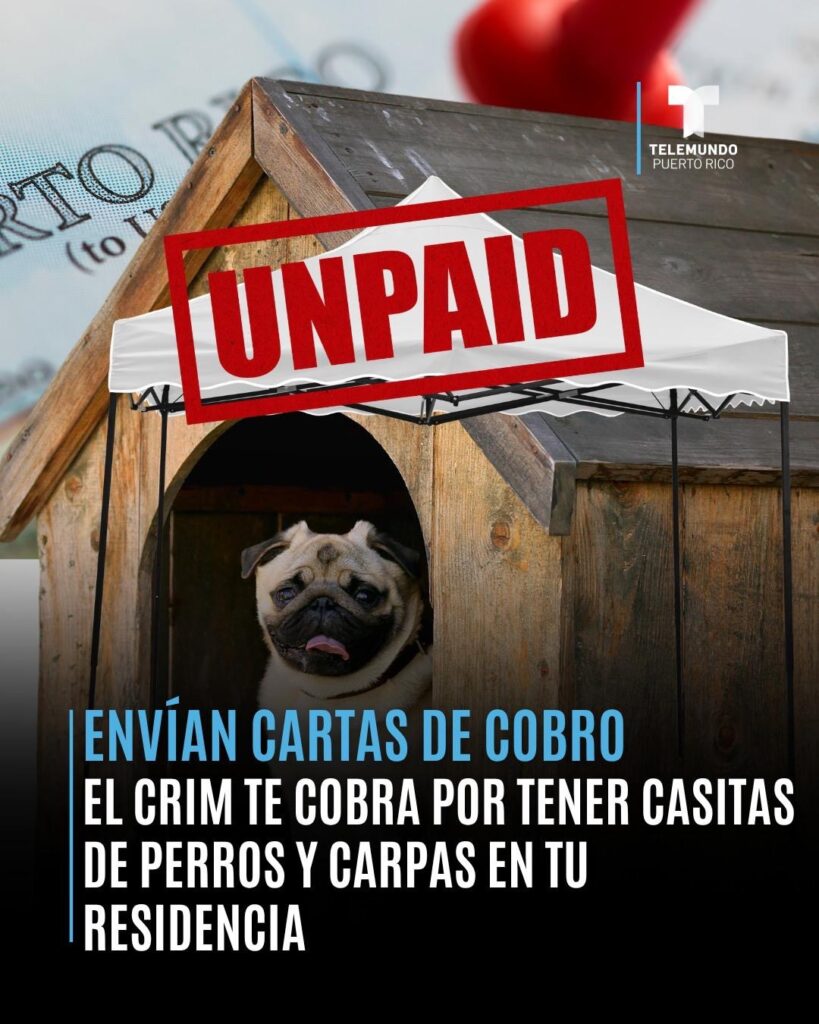
Telemundo reported that CRIM’s Virtual Property Assessments are taxing doghouses (Telemundo, 2025)
This is a crisis that Henry George, the 19th-century economist, would have immediately condemned: the government is aggressively taxing the labor and sweat that built this family’s home, while threatening to strip them of the security of tenure they earned through decades of possession. The system is punishing citizens for informal property rights that are a legacy of our complex inheritance laws.
The Injustice of Taxing Labor and Improvements
Classical Liberalists, Political Economists, and Georgists would immediately recognize the injustice of taxing land improvements derived from one’s own labor.
Henry George’s central tenet—the Land Value Tax (LVT)—proposed replacing all other taxes with a tax on the unimproved value of the land alone. He believed the structures that people built themselves should not be taxed at all, as the aggressive taxation of these homes is viewed as a tax on the labor of the poor.
- A Tax on Sweat Equity: Most importantly, the CRIM’s flawed system particularly penalizes the poor, who out of tradition and necessity have brought families and neighbors together to self-build the family home. These homes, often unregistered with the property tax authorities, are quite literally the fruits of community and family labor; it is sweat equity at its finest. By targeting these improvements, the government is violating the principle that individuals are justly entitled to the wealth they create through their labor.
- CRIM’s Contradiction: CRIM’s aggressive new “Virtual Appraisal” project is targeting these improvements. By issuing wildly inflated and inaccurate tax bills—sometimes reaching over $12,000 for elderly residents, the government is effectively putting a prohibitive tax on the labor of the poor, entirely contrary to the goal of a fair tax system.
The Trap of Conflicting Successions and Unsecured Tenure
The new appraisal scheme also jeopardizes tenure in homes that have been passed down for generations. Further complicating things is the proliferation of clouded titles, which is a common occurrence in Puerto Rico, and that is the legacy of complex inheritance laws, a type of title trap.
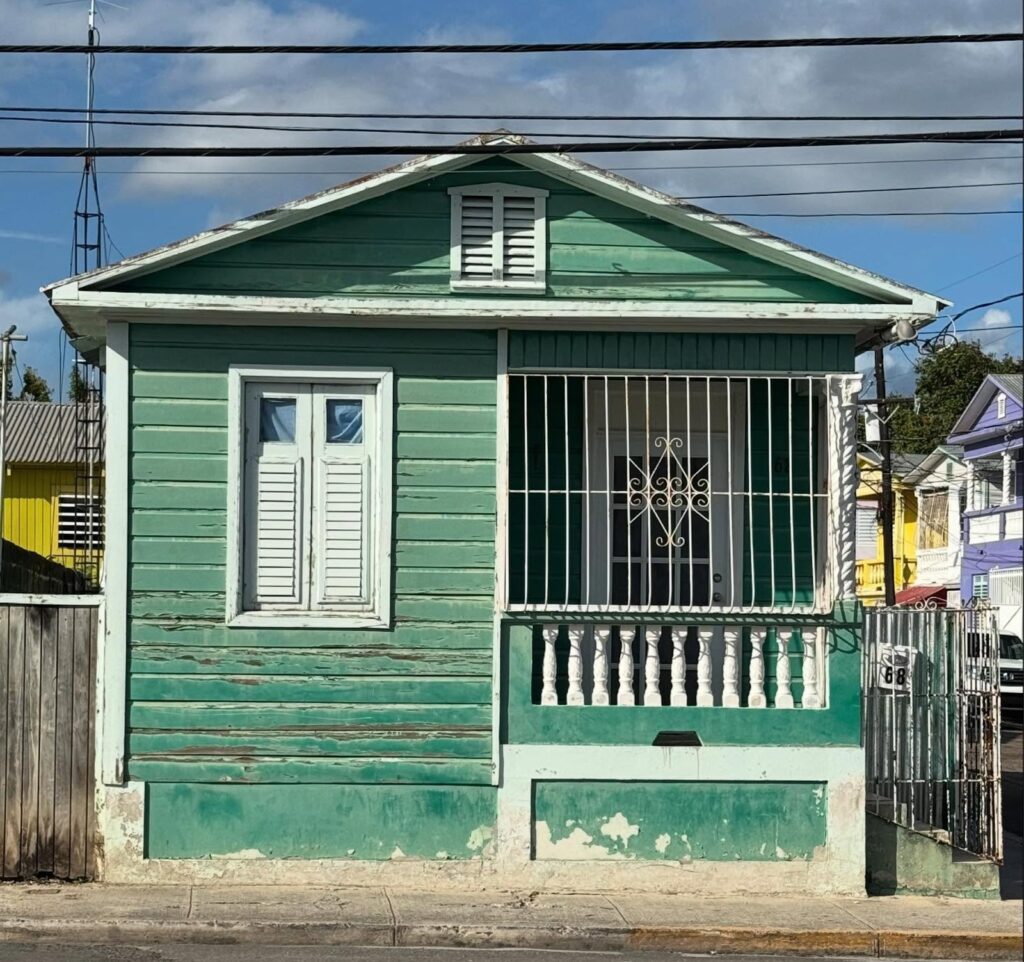
An example of typical Puerto Rican vernacular architecture found in Playa de Ponce’s self-built family homes(mi.puerto.rico, 2025).
If the original property owner dies, remaining heirs inherit the whole property together. The remaining resident heir, like Lourdes, does not legally own the house and cannot correct records independently of other heirs. Defending themselves from back taxes is that much more complex, expensive, time-consuming, and stressful, as all heirs must be identified and contacted to divide the inheritance and update the title.
As a consequence of CRIM’s new virtual assessments, people face dispossession by debt. Fixing title issues is so legally complex, requiring lawyers, courts, and thousands of dollars, that many low-income families simply avoid the process. This leaves the property vulnerable to tax enforcement actions. For residents in informal settlements who often do not have deeds or titles, it is nearly impossible to comply with standard tax requirements.
CRIM’s own “loss mitigation” process is discretionary, not a right. The agency can, and often does, proceed directly to embargo (seizure) and sale of the property if it deems collection efforts “fruitless.” This systemic failure uses the enforcement of property tax debt to penalize those who have been the long-term, beneficial possessors of the land, directly threatening the security of possession that George believed was paramount to a just society. The de facto occupants and builders are targeted for tax debt on land they cannot immediately prove they own. This places them in a fatal trap: they face a tax lien or an expensive legal process to defend their assets.
Dispossession by Debt: A Moral and Social Crisis
Based on the CRIM’s aggressive mandate to increase tax collection, its use of new surveillance technology, and its unrelenting focus on unregistered properties, it is highly likely that this effort is already causing a significant social and legal crisis for the thousands of people living in Puerto Rico’s informal settlements.
A flawed virtual system to dispossess seniors like Lourdes from their ancestral homes has clear remedies that recognize justice must come before revenue.
To halt this spiral of dispossession and build a more equitable future, comprehensive reforms rooted in the principle that a home built by one’s own labor should be safe from government seizure and taxation.
In line with Georgist philosophy, the immediate focus could be to pause all enforcement actions against residential improvements in informal settlements.
Second, the issue at hand underscores a need to simplify tenure for property heirs. This means radically lowering the legal and financial costs of dividing inheritances, thereby creating an affordable, accessible mechanism to formalize possession rights for long-term occupants. This will give families the legal footing they need to protect their homes, turning insecurity into stability.
Tax policy can preserve the social fabric of our communities and be vehicles for security and justice. Ensuring the legacy of family homes is a good place to begin.
