
Puerto Rico’s electric grid is notorious throughout the world. Its colossal meltdown after Hurricane María contributed to an estimated 2,975 excess deaths across the archipelago. Without electricity, life-sustaining medical devices failed, insulin spoiled without refrigeration, and dialysis patients struggled to access treatment. My neighbors and I were without electricity for “just” a month, while elsewhere on the island, the power outages persisted into the summer of 2018.
Subsequent research demonstrated a clear relationship between the duration of blackouts and mortality. A Washington Post analysis comparing satellite imagery with death records found that communities without electricity for more than four weeks experienced mortality rates up to 270 percent higher than historical averages.
A decade later, service interruptions have intensified. Between 2022 and 2025, outages increased by almost 30 percent. In 2025 alone, the average customer spent more than 28 hours without power, roughly 17 times higher than typical U.S. reliability standards (Guillama Capella, 2026).
These decaying energy conditions carry serious implications for Playa de Ponce, a coastal community on Puerto Rico’s southern shore where I live and work as an embedded researcher for community-driven climate adaptation. Approximately 36 percent of La Playa’s 11,489 residents are 65 years of age or older; thus, a population especially sensitive to extreme heat and medical emergencies during blackouts. The financial impact is considerable. In multiple census tracts within Playa de Ponce, households allocate as much as 10 percent of their annual income to electricity costs, substantially exceeding the archipelago’s average of 4 percent (NRL, 2026).
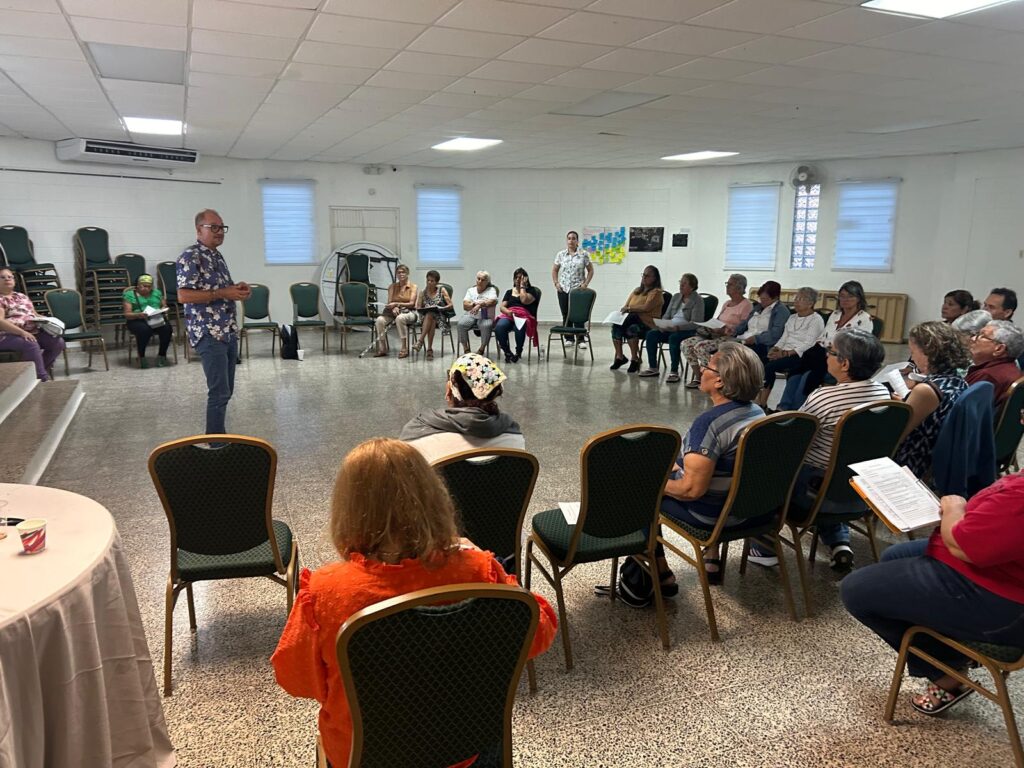
In 2025, the Playa-based community organization, Un Nuevo Amanecer, Inc., launched LUCES para la Playa (Light for the Beach Communities), supported with the U.S. Department of Energy’s (DOE’s) Energy Technology Innovation Partnership Project (ETIPP) technical assistance program. The goals was to develop a Strategic Energy Plan (SEP) that responded to community-identified priorities and needs. Researchers from the National Laboratory of the Rockies (previously known as the National Renewable Energy Laboratory) worked alongside local leaders and residents. Together, they discussed and defined the community’s energy goals, developed a shared vision, and set out to make these aspirations a reality.
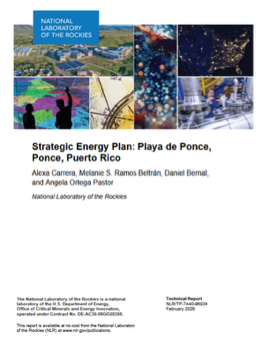
Just published, the Strategic Energy Plan articulates the community’s collective energy vision as such:
Establish community-led energy projects that strengthen energy security, enhance safety, and ensure reliable access to energy—all grounded in the needs and voices of Playa de Ponce residents. These efforts will be built through collaboration, local capacity building, and solutions that also support the community’s long-term economic development
The Strategic Energy Plan centers future action around three themes:
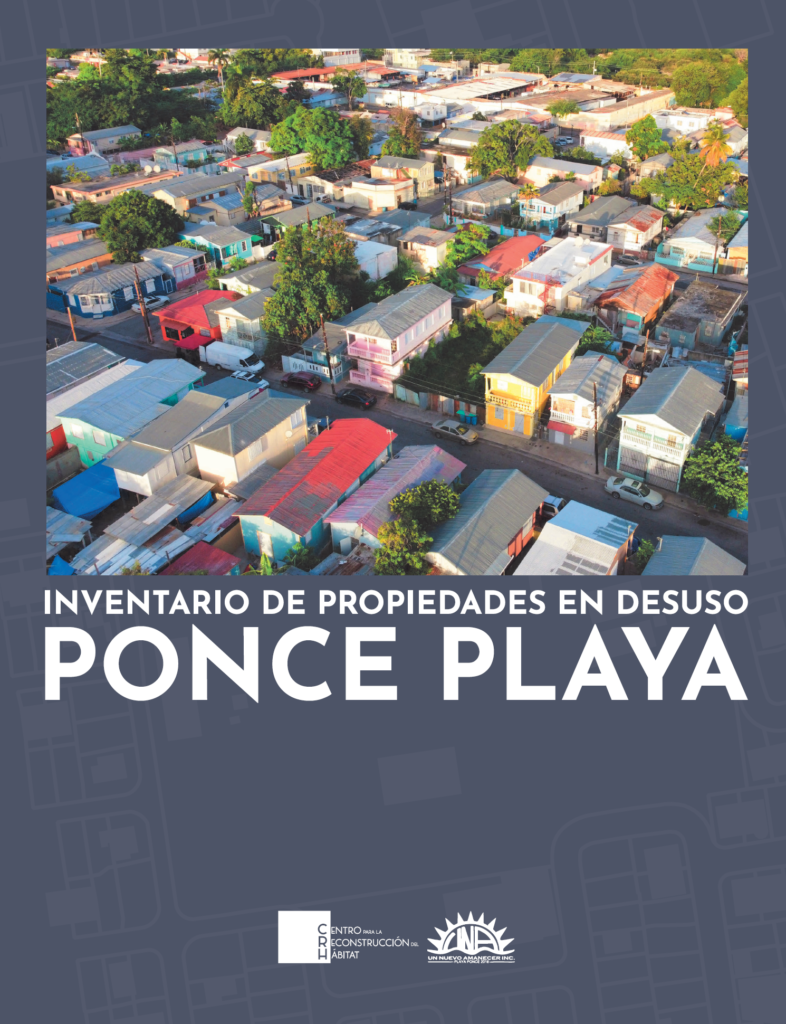
1. Energy Reliability The community’s top goal is increasing its ability to prepare for, withstand, and rapidly recover from power outages. To achieve this, the plan outlines the development of resilience centers and community microgrids. The community wants to create safer resilience hubs that use rooftop solar panels and battery storage on accessible buildings such as the Un Nuevo Amanecer building and the Villa del Carmen Community Center. These centers will allow residents to refrigerate medications and power life-sustaining equipment during extended blackouts. Furthermore, the plan explores repurposing the community’s numerous abandoned sites to host localized microgrids that can sustain critical services when the centralized grid fails.
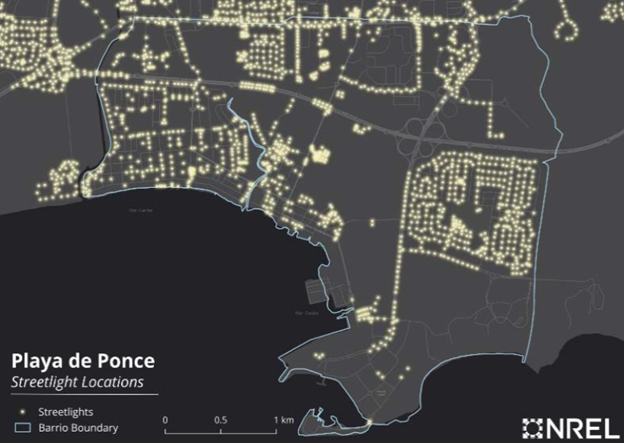
2. Safety and Security The second set of priorities elevates well-being concerns tied to frequent blackouts. When neighborhoods are instantly plunged into darkness, unsafe backup generators may cause fires or asphyxiation from fumes, people may fall in the darkness, and crime may rise. To address these issues, community members favored installing reliable, stand-alone solar-powered street lighting to illuminate public areas and ensure safe mobility during emergencies.
3. Stakeholder Participation, Education, and Capacity Building Residents prioritized community coordination and workforce development, thus linking community-led decision-making, trust, and economic development to the long-term local energy system sustainability. They asked for educational workshops on how to operate and maintain local energy systems, as well as tailored engagement methods and age-appropriate training materials.
Setting priorities
During the strategic planning workshops, participants evaluated and ranked the proposed energy projects based on their urgency, importance, and implementation feasibility. Across all three workshop locations, public solar lighting was unanimously ranked as the highest priority and the fastest-to-implement project.
The desire to make solar streetlighting a reality reflects the community’s desperate need for immediate, visible improvements tied to local safety. While microgrids and resilience hubs are recognized as vital long-term solutions, they require significant capital, complex land acquisition, and years of planning. Conversely, stand-alone solar-powered LED light poles with battery backups can be deployed rapidly without relying on the broader electrical grid. Illuminating poorly lit streets and high-priority zones, such as areas near schools, parks, elderly housing, and emergency evacuation routes increase neighborhood security and improve mobility in sudden blackouts.
The Strategic Energy Plan for Playa de Ponce is a profound act of self-preservation. It represents community-level post-traumatic growth through proactive, community-led infrastructure planning. The residents of Playa de Ponce are proving that energy justice is fundamental to both progress and survival. Through targeted investments in solar lighting, resilience hubs, and local education, Playa de Ponce is stepping out of the dark and taking power back into its own hands. The work continues in 2026 and 2027 to study the viability of the proposed initiatives, as well as to produce a roadmap for their implementation.
