Skip to content

*Housing

Affordable Housing in America. Will efforts to build more and cheaper work?

The financial crisis of 2008-10 illustrated the immense danger of a malfunctioning housing market. According to The Economist, between 2000 and 2007, America’s household debt rose from 104% to 144% of household income, and house prices rose by 50% in real terms. San Francisco and other large metropolitan areas in the U.S. are experiencing rents that represent 40% of the average person’s earnings. Housing is too expensive, which is damaging to the economy and poisoning politics.

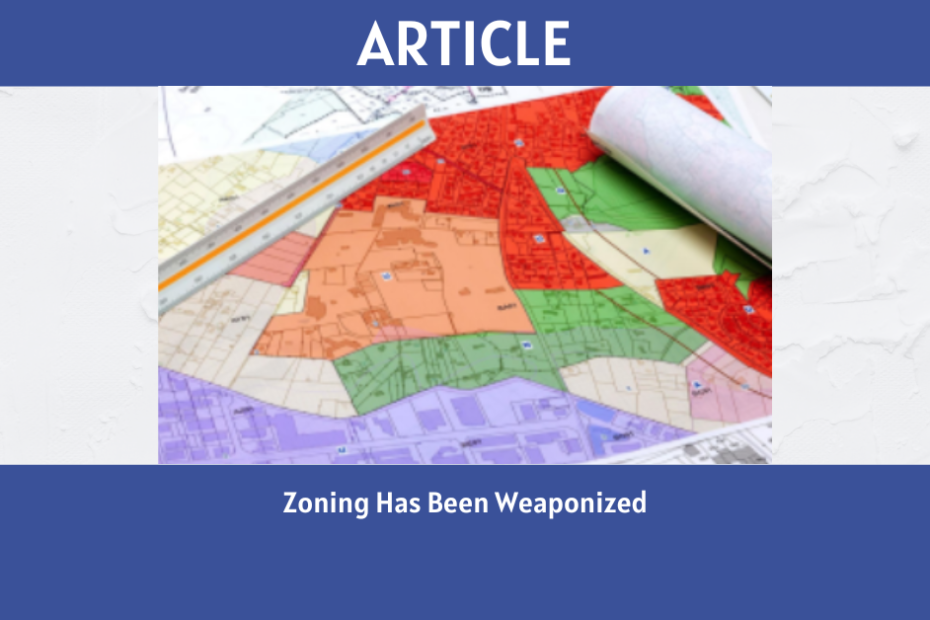
Zoning Has Been Weaponized

Low-density housing typically refers to residential areas occupied primarily by single-family homes or buildings with a limited number of dwellings. There is no set definition, but one characteristic of such an area is that the inhabitants start complaining about any housing development that is too… Read More »Zoning Has Been Weaponized

Saving Los Angeles

To save itself, Los Angeles must return to its original hair color or, as they say, “its roots.” When my great-great-grandfather landed in Los Angeles in 1890, there were commuter trains. Downtown Los Angeles was an actual center city, not simply a name of one of over 400 neighborhoods. Los Angeles’ functional boundary currently has 400 neighborhoods whose names rarely denote anything more than a feeling from a particular time.

Free Newark Now!

Along with New York City, Newark, New Jersey, possesses one of the best locational advantages of any city in the United States. Founded in 1666 by Connecticut Puritans, the town grew by leaps and bounds; the Industrial Revolution sparked a meteoric increase in population and a multi-sector industrial and commercial base. First, canals and then railroads converged into the city. With a population of 8000 in 1820, people poured in, swelling the city’s population to 367,000 by 1910. 

The civic confidence of Newark was such that city leaders in government and business thought it was time to go big. In the era of bold public development, the Meadowlands of New Jersey (known as Newark Meadows) consisted of 46 square miles of what today we would call wetlands but then were called “wastelands.” 4300 acres lay inside the city limits of Newark, and plans were executed and funded by the city to build a port from the “reclaimed” land.