
Most Americans associate the Red Scare with historical events like the Hollywood Blacklist, House Unamerican Activities Committee, and the televised McCarthy hearings. What they may not know is that this was actually the second instance in which fear of radicals led to massive Federal law enforcement investigation and action. Though shorter than its later counterpart, the First Red Scare, which followed the Bolshevik Revolution and the civil unrest accompanying the return of American soldiers from World War I, is in many ways relevant today.
Indeed, there are striking parallels between the US then and now, including the focus on foreigners as the source of danger and the use of deportation as a weapon against ‘undesirables.’ The famous Palmer Raids between 1919 and 1920 arrested thousands of foreign born residents and sought to deport them. Many were arrested and held on the grounds that they were creating unrest in service of socialist or anarchist beliefs.
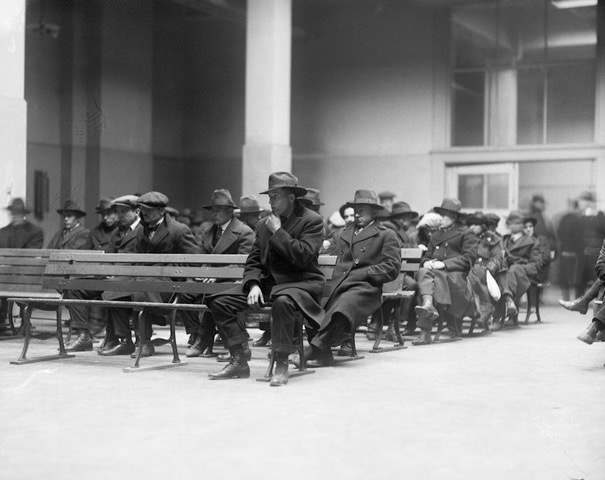
However, many of these deportations were halted by Secretary of Labor Louis F. Post, who became a hero for civil libertarians and a villain to the ‘anti-radical’ movement. When Post was dragged before Congressional committees, he impressed many observers with his sense of duty to the Constitution over a passing political frenzy. The New York Evening Post assessed his performance during the scare as follows:
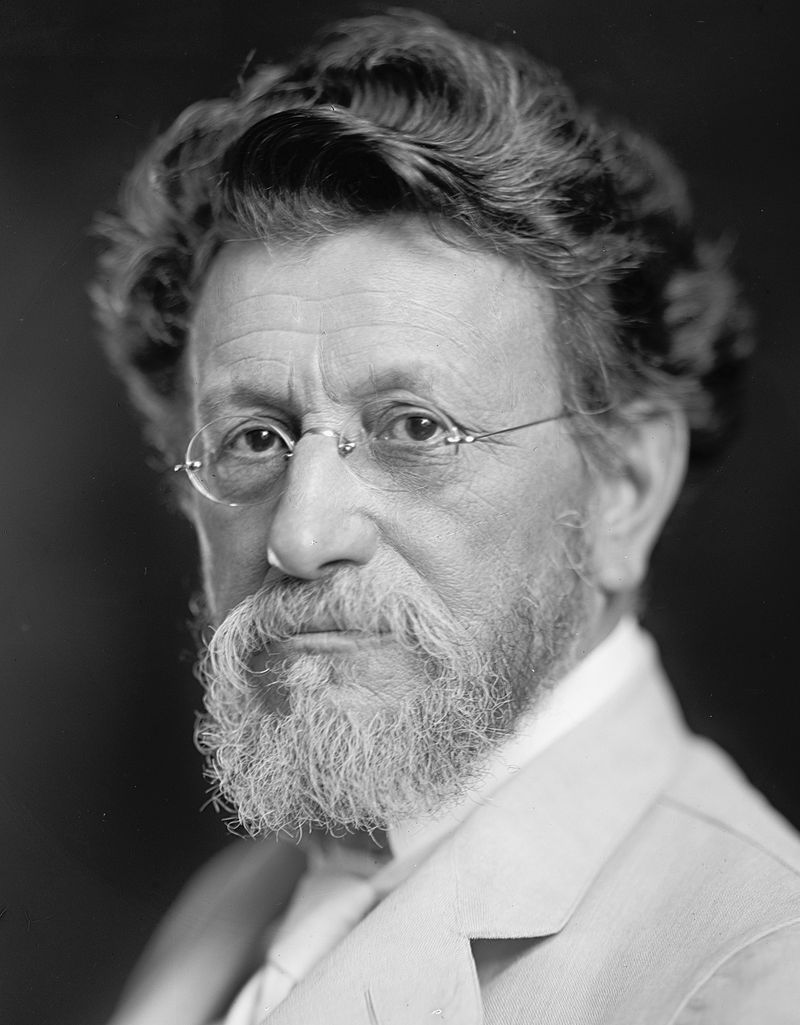
“The simple truth is that Louis F. Post deserves the gratitude of every American for his courageous and determined stand on behalf of our fundamental rights. It is too bad that in making this stand he found himself at cross-purposes with the Attorney General, but Mr. Palmer’s complaint lies against the Constitution and not against Mr. Post.”
In addition, and I would argue, not coincidentally, Post – one of the founding board members of the Robert Schalkenbach Foundation (later to become the Progress and Poverty Institute) – was in his era one of the most prominent Georgists in the country. While Georgists at that time gravitated towards the Single Tax Movement, which did not have immigration as a major focus of its activities, at least two major facets of Georgist thought likely influenced Post’s refusal to go along with the mass deportations of his era. One is openness to radical social change; the other is the rejection of eugenics and Social Darwinism. As this article will explore, these two beliefs clashed directly with the national shift towards nativism that occurred in the 1920s, and they should remain a major pillar of Georgist thought today.
Georgism: Radically Liberal
Georgism, because it is rooted in the long standing liberal tradition and does not explicitly call for violent revolution, is rarely considered an archetypical ‘radical’ movement. Nonetheless, Georgists, especially in the later 19th and early 20th century, were arguing for a truly radical change and often found themselves rubbing shoulders with other radicals. Because he denied the justice of rents, George was often accused of being a socialist; he did not entirely reject the label, arguing in Protection or Free Trade, that “Individualism and socialism are in truth not antagonistic but correlative’, and while he disagreed with Karl Marx, he did write at Marx’s passing that “his memory will be cherished as one who saw and struggled for that reign of justice in which armies shall be disbanded and poverty shall be unknown and government shall become co-operation.” Unlike many others in the liberal tradition, Georgists were likely to be less openly hostile to socialists, even if they disagreed with the means employed by revolutionaries in Russia.
Similarly, while mainstream Georgists typically envisioned a future in which (non-land) property and government continued largely on conventional lines, the two philosophies were not entirely antagonistic. One of the most prominent anarchists in the world at the turn of the 20th century, the novelist Leo Tolstoy, was also a believer in Georgist thought. Tolstoy wrote of George’s book Social Problems that he was “struck by the correctness of his main idea, and by the unique clearness and power of his argument.” And there were American Georgists who saw some kinship with anarchists as well. William Marion Reedy, a Georgist newspaper editor, wrote sympathetically of the Russian-born anarchist activist (deported in 1919) Emma Goldman, in his essay ‘The Daughter of the Dream’. Like George with Marx, Reedy saw the best intentions of anarchism, calling it “an aspiration toward and an effort for the perfection of humanity.”
Early 20th century Georgists were thus more disposed to at least tolerate and dialogue with socialism and anarchism, the primary radical ideals that were targeted during the First Red Scare. Combined with a dedication to liberal principles going back to George’s own correspondence with John Stuart Mill, it is no surprise, and no coincidence, that it was the Georgist Post who, as Secretary of Labor, refused to bend the Constitution to purge these much-hated radicals from the American public. Modern Georgists may find themselves in a similar situation: open borders, antifascism, and decolonization may not be closely connected to George’s writing and main ideas, and many more conventional Georgists may understandably find them unfamiliar and uncomfortable. Nonetheless, these all provide opportunities to connect to new communities and philosophies and, most importantly, these all deserve protection under liberal constitutional ideals. The deportation or exclusion of “foreigners” on the basis of their ideological views needs to be viewed with utmost skepticism. Here, Louis Post is a valuable role model.
Against Lamarcks and Spencer
More broadly, the context around the shift towards nativist policy in the early interwar period, including the Emergency Quota Act and Immigration Quota Acts, passed shortly after the Red Scare, included a heavy dose of eugenic beliefs. Many Americans believed that the Italians, Poles, and other “new immigrants” were less genetically fit than the “Anglo” stock of “heritage Americans,” and used newly developed intelligence aptitude tests (which rewarded English language proficiency and formal education) to argue their case. George’s own writing, however, denied this account of intelligence. In Progress and Poverty, he wrote that:
“The physical differences between the different races of men are hardly greater than the difference between white horses and black horses—they are certainly nothing like as great as between dogs of the same sub-species, as, for instance, the different varieties of the terrier or spaniel . . . And if this be true of the physical constitution of man, in how much higher degree is it true of his mental constitution? All our physical parts we bring with us into the world; but the mind develops afterward.”
Unlike most of his white contemporaries, George denied any meaningful difference in mental abilities between races or lineages of people. Thus, George also did not endorse the Social Darwinist views that would come to justify the nativist regime emerging in the early 1900s.
Eugenics is not as popular today as it once was, but under titles such as “race realism” and “human biodiversity,” the idea that only certain lineages of people are desirable as residents or are mentally capable of building a modern economy persists. It is the foundation of the conviction that the United States and Europe must preserve their “racial heritage” against immigrants from other continents. It is the barely-unspoken assumption that comes with demands to end a “third world” invasion. But as George demonstrated over a century ago, nearly all the differences in development between peoples derive primarily from their political economy and history, and not any inherent genetic differences. Georgists should be on the forefront of opposing this viewpoint, and the nativist fears it stokes.

Acute fears of radical infiltration and broader racialized anxiety prompted mass deportation and an unprecedented restriction of immigration during and immediately after the First Red Scare. While George did not live to see these shifts, and organized Georgists dealt relatively little with immigration as an issue, George’s broader worldview provides ample reason to resist both impulses. In the tumultuous 1919-1920 deportation drive, Louis Post stood for civil liberties and the constitution in the face of xenophobia. Today, these same forces are present, and Georgists should take inspiration from Post’s example of resistance.
